Blog

Does Guru Granth Sahib describe depression? by Kalra et al

depression-1250897_960_720

This month’s article was ‘Does Guru Granth Sahib describe depression?’ by Kalra et al, published in the Indian Journal of Psychiatry in 2013. It can be found here: https://www.ncbi.nlm.nih.gov/pmc/articles/PMC3705682/

The discussion began with a reflection that the article had a lot of information about Gurbani for those who are non-Sikh readers. The three writers are psychiatrists (as opposed to religious scholars). They were coming from a scientific perspective but had clearly done a large amount of cursory research on Gurbani, as indicated by the several tables which listed the names of God, and the number of times that the mind is mentioned. There was some basic discussion about Sikh beliefs in the introduction along with general history. However this was not comprehensive and it appeared that the authors had taken an Abrahamic approach to Sikhi which became prevalent after the Singh Sabha movement, as opposed to getting to grips with non-dualistic aspects of Sikh spirituality which would have provided a completely different perspective on depression.

It was made clear that the authors had translated the word Dukh to mean depression, and they hadn’t qualified their definition of depression. The members discussed whether this translation of ‘Dukh’ was fair or accurate. It was felt that Dukh refers to any state of detachment from the Guru, and is our mindset or perception of things, and does not necessarily refer to physical pain or any particular definition of mental illness. It became apparent as the article went on that they were referring to milder forms of psychological depression as opposed to biochemical depression in which there is a deficiency of serotonin in the brain requiring ongoing replacement. At one point the word psychosis was used in the article, again without qualification of what this meant, and in the context of their discussion seems far-reached from the clinically accepted definition of psychosis.

There was discussion amongst the members about the causes of depression and the fact that depression is often a physical illness (and changes in the biochemistry of the brain have been proven). Recently there has been great interest in the use of faith and spirituality in dealing with depression. However there isn’t the same level of interest in using faith and spirituality to heal other physical ailments such as broken limbs, and for good reason. Therefore we need to be careful when talking about such subjects so that we are clear that spirituality can provide solutions and tools to manage to milder forms of illness (including some types of depression and pain) but should not be promoted as being the only tools available for all types of depression.

It was clear that the authors’ agenda was to prove that Guru Granth Sahib Ji does mention depression, but their arguments were devalued by their approach. The members wondered whether it would have better for the authors to discuss the existence of depression and then use Gurbani to explore what tools it provides for depression management, rather than attempting to project or fit illnesses within the angs Guru Granth Sahib Ji. There is no doubt that faith can be a great healer, and the members discussed that many faiths attempt to remove troubles of the self and instead place these troubles in the hands of God, which can be powerful in some cases. The article specifically mentioned this as being an aspect of Sikhi. Similarly spiritual arts including music have been proven to be helpful in many illnesses including mental illnesses.

The authors raised the question of whether Sikh communities avoided access to medical help for mental illness, but only discussed this very briefly with reference to the influence of karma on people’s perceptions of whether they are deserving of illness. Members debated the influence of karams on illness and whether this is relevant when treating people for illness. Members felt that the authors had taken many words from Gurbani out of context, despite the importance of examining context and the broader message behind the Guru’s words.For example, anyone with any understanding of Gurbani knows the world isn’t divided into Manmukhs and Gurmukhs but instead that we all contain aspects of light and dark which we constantly struggle with. Better metaphors could have been chosen to describe the emotions associated with depression e.g. the mind drowning and the wisdom of the Guru pulling the individual up from the blackness of the ocean.

This led onto a discussion about the practical approaches that Gurbani recommends for maintaining emotional health. Even in scientific circles, integrative approaches such as mindfulness (alongside medicine) have been increasingly used to manage mental illness. Gurbani similarly recommends meditation as a way of healing the mind, but in such a way that minimises one’s ego. The members discussed how this can be used in clinical practice and reference was made to a clinical psychologist Kala Singh in Canada who utilises some aspects of Gurmat to help tailor cognitive strategies for Sikhs suffering with mental health problems (see Spirituality and Health International, DOI 10.1002/shi.331).

The members discussed the ICD-10 criteria for depression and how this is not absolute (and essentially is consensus opinion). The criteria for depression also depends on one’s cultural background i.e. what is considered mental illness in one culture may not be considered mental illness in another culture. An interesting point was raised regarding the fact that, by today’s standards, it could be considered that Guru Nanak Dev Ji was depressed. This is because he went through a period of time in his life where he withdrew from his family and appeared to have anhedonia, poor appetite and could be considered by outsiders to have low mood. A physical physician came to see treat him but was unable to do so. We know, of course, that Guru Nanak Dev Ji was not depressed as such, but was spiritually elevated and focused on a relationship with the Divine. This raises interesting questions about the line between devotion and how its effect can be perceived by others. It is also made much more complex by the fact that many people with true mental illness perceive that they are communicating with Jesus or God and it can be difficult to tell whether this is illness or true religion.

Overall, this topic is an important one to address, but the members of the book club felt that this article did not do it justice. Rather than addressing depression, it addressed general emotional distress. Despite this some valid points were made regarding the importance of understanding the mind, building a relationship with the Guru and meditation.
‘Travels of Guru Gobind Singh’ by Fauja Singh

Guru_Gobind_Singh

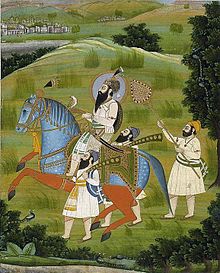
This month’s book was ‘Travels of Guru Gobind Singh’ by Fauja Singh. The book can be found here.

The members began the discussion by reflecting on the the commendable efforts made by the authors to chronicle Guru Gobind Singh Ji’s life and events. The book placed emphasis on the importance of understanding geography, and how this in turn helps us to understand the strategic decisions which were made by the Guru. Clearly the authors had gone to a huge amount of trouble to research and catelogue the travels of Guru Gobind Singh Ji from a diverse number of sources. We often hear about the four Udasis of Guru Nanak Dev Ji but it is less often that we hear about the travels of the other Gurus, and indeed none of the members had previously encountered this book.

It is interesting that Guru Gobind Singh Ji only spent his childhood in the plains of India – the majority of his human life was spent in the foothills of the Himalayan ranges. From a historical perspective, geography plays an important role in the defence of a nation e.g. the Afghans have defended their mountainous country for many decades, but Punjab was much harder to defend as recently as the 1980s when there was little in the way of anything other than flat land. At the same time the book provided an insight into how large Punjab used to be, and also how the names of important places have changed over time e.g. the original name given to Anandpur Sahib was Makhowal. The Guru presumably often travelled with a large group of people (in effect travelling within a mobile court) but at certain points also travelled alone and in disguise. Along the way gifts were given by the Sikhs to their Guru, and the Guru in turn gave the Sikhs various written and verbal hukamnamas or orders. In this way the Guru was in constant contact with the Sangat across the country. Certainly right from a very young age the Guru travelled extensively with his family and crosses the Ganges river many times on his travels around India.

The book would have been even better if any available maps used in the 1600s had been included, to reflect the lay of the land at the time. Presumably the the Gurus would have had their own maps also, to provide them with an overview of the land which required defending. Forts were clearly built strategically and with clear purpose.

Interestingly, Guru Gobind Singh Ji visited many places of pilgrimage which are not often associated with the Sikh faith now e.g. the confluence of the rivers at Triveni and other sacred shrines and places of worship. This calls into question the attitude that many Sikhs have today of shunning such places. It is unclear from the book whether Guru Gobind Singh Ji visited these places to do parchaar or to pay homage to ancient places of dharam. Throughout their travels, Gurdwaras sprang up at many places along the way. It is difficult to know if all these Gurdwaras still remain or whether we have lost a significant proportion of them over time. The book provided a significant insight onto the experiences the Guru Gobind Singh Ji encountered during their travels, including the stories behind some of the Gurdwaras which were built.

The book also touched upon the adopted sons of Guru Gobind Singh Ji, which again is not common knowledge amongst Sikhs today. Also interesting was the timeline of the Guru’s travels in chronological order which helped to take the readers on a similar journey. Members concluded that this made the book easy to read and the supplemental use of maps and pictures helped to bring the travels alive in the eye of the reader.

Saragarhi: The Forgotten Battle by Jay Singh Sohal

saragarhi pic

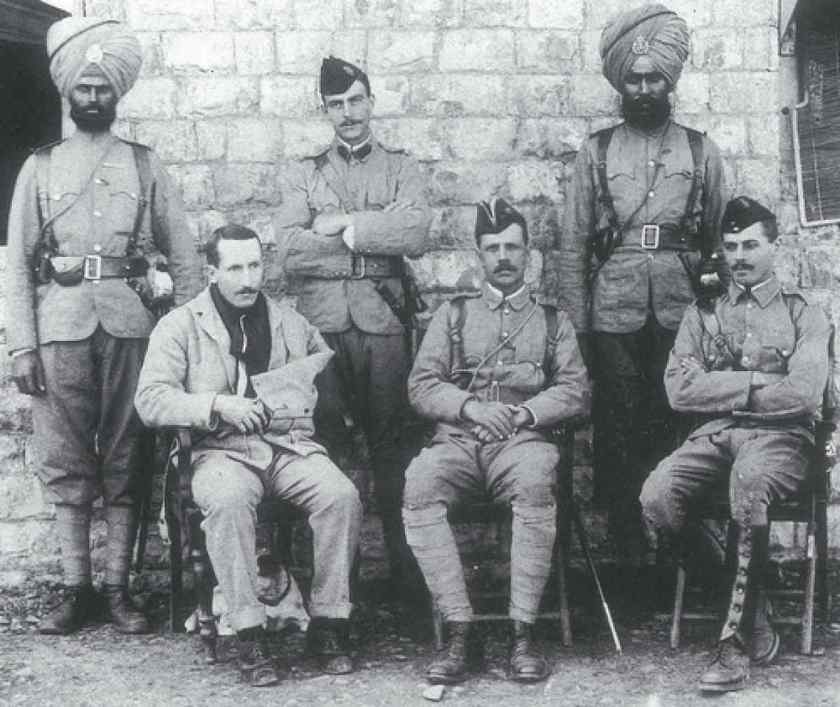
The members began the discussion by recognising the growing movement of Saragarhi being discussed in recent months. In the city of Bradford, the children from the Punjabi schools have come together collectively to make posterboards about the Saragarhi battle. Similarly members reflected that there was a meeting of military defence personnel in Leeds and there was a talk on Saragarhi last year. Overall there is a growing awareness of this battle and perhaps it is now less forgotten. This is likely to to be as a result of the author’s determination to spread awareness about the topic.

The author compared Saragarhi to the ‘300’ epic battle between the Spartans and Persians which has been portrayed in films. Comparatively Saragarhi is less well known and this inspired the author to write and research the subject. The members discussed why is Saragarhi forgotten? One member felt that this is because the Sikh soldiers were regarded as second class citizens of the British army as they were not natively British. On the other hand the British did their part to monumentalise the efforts of the Sikhs e.g. putting monuments up in Amritsar. The author reflects that Sikhs predominantly don’t tend to read very much, and therefore history is forgotten. Similarly our education systems don’t value the sacrifice, and therefore the battle is not routinely taught in Indian education. The monument isn’t well known in Amritsar, even though Amritsar is visited by millions of people worldwide. History is easily forgotten!

There is no doubt that there is much sentiment surrounding the battle. In some ways this has made it harder for the author to research the battle accurately as there have been many myths spread about the battle. One member recalled receiving leaflets in Africa about the battle from the Indian Government which contained some of these myths.

The members reflected that the production of the book is highly commendable and an excellent effort. We definitely need more books like this within the Panth and wider public. There were some minor criticisms of the book by the members. Unfortunately the book contains a number of relatively minor spelling mistakes. The term warrior-saint is used to describe the Sikhs but the term put forward by history is saint-warrior and there are fundamental reasons why this is the case, as being warriors comes secondary to spirituality. Overall the members felt that the book was well structured, with chronological events, a foreword and preface. The subsequent chapters also followed on well and provided the reader with a good structure surrounding the narrative. There were some points which could be incorporated to improve the quality of the published book, but these are relatively minor points compared with the efforts taken to produce the book. The members recognised that the author has made huge efforts in publishing the book and has in all liklihood self-funded the publication.

Moving on to the content of the book, the author provided a good historical background of events leading up to the battle of Saragarhi. The members discussed whether the book one-sided in termsof perspective. Obviously the focus of the author is the perspective of the Sikhs and the British army. However the perspective of Pathans is not discussed. It was once said that Afghanistan is the graveyard of armies, and the local people of the time must also have an interesting alternative viewpoint of the historical events. However it is possible that the viewpoint of the Pathans has not been recorded and is therefore more difficult to represent. It is also well known that colonial masters often bribed villagers and locals to prevent them from discussing events openly. This also may skew historical accounts.

The members discussed the implication that the martial spirit of the Sikhs was born out of shaheedi of the 5th and 9th Gurus. Some members felt that these events should have been discussed in more detail if this was the case. However other members felt that this viewpoint was not accurate and that it minimised the martial history of the Sikhs which actually begun much earlier in history and was integral to the faith from the beginning, rather than being a reaction or a result of Mughal invaders. One member reflected upon the fact that there is evidence of Guru Nanak Dev Ji being armed and demonstrating physical combat with Babar. The shaster vidhya tradition pays homage to this and continues to teach Baba Nanak Pentra (the footwork of Guru Nanak Dev Ji) as a model of fighting. Some felt that dialogue and diplomacy is part and parcel of martial spirit.

The historical sacrifices made by the Sikhs at Chamkaur Sahib was mentioned by the author as comparative to the battle of Saragarhi. However Chamkaur Sahib possibly reflects an even purer sacrifice as the Sikhs were an autonomous unit fighting directly for the Guru rather than being influenced by a colonial mentality. However the members recognised that the author is part of the British army and therefore has a dual allegiance with this unit which still exists today. In this situation is difficult for a writer to be impartial in narrating events. It also means that despite the battle of Chamkaur Sahib being one of the most significant for the Sikhs, the battle of Saragarhi was chosen for study by the author, possibly in view of his connections with the same army.

It is interesting that there was a profound change in Sikh allegiance over a period of 20-30 years in India during this period. The members felt that this needed a little more explanation and analysis. The same soldiers who were fighting against the British earlier in the century were now fighting with them to battle the Pathans. The author implied that historically the Pathans were the enemy of the Sikhs, but Sikh philosophy doesn’t hold subsequent generations accountable for the actions of their ancestors. Similarly it is easy to see the viewpoint of the Pathans who waged a war for what they saw as being the right to govern their own native lands. One could argue that the Sikhs should have been fighting with the Pathans against the British.

The members reflected on the lengths that the colonial masters went to try and manipulate Sikh heritage and texts, which influences our views and perceptions to this day. Panth Prakash was written by Bhai Rattan Singh as a direct response to this. In a well written historical narration of Sikh History, the author alludes to Sikhs within the army giving their head to their Gurus in Amrit Sanchars and dually swearing allegiance to the British crown at the same time. The members reflected upon the potential conflict this might cause, as soldiers are inevitably drawn into unjust wars. On the other hand being a soldier is a job, and being drawn into an unjust war may simply be part of that job. But it shouldn’t be compared at the same level to giving one’s head to the Guru.

The author and writers of the time implied that the Sikhs would have merged into Hinduism without the saving grace of the British Army. The members discussed the irony of this statement. Did the British help the Sikhs to keep their identity? Or had they intentionally destroyed the Sikh identity and subsequently taken the credit for encouraging its reinstatement? Similarly the colonial masters were paying for the installation of the Mahants – but were they put there to protect Sikh values or were they stooges of the British? There is no doubt that the British were paying politics – much of our modern history is a byproduct of their cunning. The fact of life is that rulers played whatever cards they can to serve their own interests. In the context of the battle of Saragarhi, the British employed methods to initially keep the Sikhs as second class citizens and and then subsequently used their skills to their advantage when it suited them. The Sikh soldiers were not given the same recognition and rewards as the British soldiers.

Nothing can diminish the sacrifice of the soldiers involved in the battle. In the chapter entitled ‘The Last Stand’, the numbers are stark, sharply convincing the reader that the odds in this battle were overwhelming. The author provided an insight into the weapons used and possible number of rounds fired, and compared this with modern weaponary in order to bring the battle to life. The leader Isher Singh demonstrated true leadership and led from the front rather than from a distance. However despite the factual nature of the book, Gurmukh Singh is regarded as taking his own life. This was an odd assumption to make given that the author consistently tried to narrate the events factually. Regardless, it is clear that the faith of the Sikh soldiers involved in the battle cannot be doubted.

It is interesting that historically the concept of a Sikh Nation and Sikh nationals was routinely accepted in the late 1800s. Now it is regarded as a divisive and politically loaded issue, and those in favour of a Sikh nation are regarded almost as fanatics. It is interesting how perspectives change over a relatively short period of time.

Taking away the political aspects of the situation, the book ultimately recognises the huge sacrifice made by our Sikh fathers and grandfathers, and provides readers with a unique opportunity to learn lessons from the battle. It is an excellent example of Sikh-inspired research and historical analysis which is now widely available for the public to read. We can only hope that the author and other writers will continue to produce further publications after similar efforts.

Bandginama by Raghbir Singh Bir

Untitled

This month’s book was ‘Bandginama’ by Bhai Raghbir Singh Bir. The book can be found here.

Summary of analysis

  • Background of the author
  • Purpose of the book
  • Style of the book
  • Key messages
  • Spiritual aspects
    • Sangat, simran, prayer and faith
  • How to change oneself as a result of this book

The book club meeting began with a discussion on the author Bhai Raghbir Singh Bir. He had a noble objective in primarily aiming to help younger people and the western generation gain some wisdom in terms of spirituality. He felt that the focus was all too often placed on external regalia and history rather than true spiritual practice. Bhai Raghbir Singh also took the unusual step of sharing his spiritual experiences rather than keeping them anonymous or ‘gupt’ and there was a brief discussion on the pros and cons of this attitude. Certainly Bhai Raghbir Singh appeared to have achieved a great deal in his lifespan, including the creation of a magazine, newspaper, trust and school. He was also heavily involved in the Akali movement which is not well known. He tried to retain his sense of national identity by rejecting the ideas of the colonial rulers and in turn the British then banned publication of some of his books.

Interestingly, Bhai Sahib also kept his spiritual practices secret from his family. He would wake up in the middle of the night and so simran, then going back to sleep before his family would notice. He shared his real experiences in the book, but also was honest about his own failings. The editor of the book mentions that one of the main purposes was to remove honest doubts from within the minds of ordinary people. However the book was also described as a book for every faith, highlighting the universality of the message of the Sikh faith. On member reflected that Bhai Raghbir Singh seemed like a scientist of the spirit – he would ask for advice, then put this into practice and monitor the results. He had an incredible amount of discipline and diligence over many years. Despite this he was honest with the reader about getting stuck at certain points in his spiritual journey, sometimes for many years at a time. But he persevered and wanted to better himself continually. The members discussed the comments that Bhai Raghbir Singh made regarding the lack of spiritual education we have access to today. We reflected that there are not many face-to-face avenues to go to thesedays to obtain spiritual knowledge unless one has a good understanding of Gurbani already. The members discussed the models of education in the UK where spiritual knowledge is taught to very young children e.g. learning how to share, but is very quickly lost as a child grows and is educated in higher classes. The focus moves away from spirituality very quickly onto materialistic things.

The book used Shakespearean English to translate the meanings of Gurbani which some members found difficult to read. It was recognised by almost all members that this book requires reading several times to digest the full amount of information. Certain themes from the book jumped out at different members of the book club e.g. when Bhai Raghbir Singh says that the onus is on the individual as to how the world appears to them. One of the main key themes was the importance of spiritual experience (rather than jus reading). The author recommended that the way to build experience is to start walking on the journey of Sikhi. The author appeared very genuine in the way that different concepts were described. In one section on the contradictions within Gurbani, he describes very gently why this is the case, providing clear explanations to the readers. He recognised that individuals can only interpret experiences and Gurbani as per their own experiences and knowledge level. Overall the members found the book very accessible in terms of the reader building a relationship with the author and then continuing on a journey together. Bhai Raghbir Singh integrated stories e.g. meeting Fakirs and other spiritual souls, which made for very interesting reading. At the same time he was not prescriptive in his views and at no point did he make the reader feel that only his way was the correct way. He was honest about his limitations and readily admitted that he had not reached the level of Samadhi as yet.

There were several themes which centred the book including simran, knowledge, prayer and faith. Bhai Raghbir Singh stated that one of the ways in which to gain true Sangat is by reading books as one can access ancient wisdom otherwise inaccessible. He quoted many different authors from eastern and western traditions which provided valuable insights into the universality of a spiritual journey. The members reflected that the way we interact with our Sangat has changed with the advent of technology, but there is a still a need for physical Sangat. Bhai Raghbir Singh also placed a lot of emphasis on both simran and Ardas, regardless of which stage one is at. He discussed the importance of doing Ardas with full faith, and needing to the open-minded enough to receive the answer to one’s Ardas. He described in detail the difference between Ardas in Sangat and an inward ardas. The members reflected that very few of us do Ardas with 100% faith, as a child would ask something of its mother. Bhai Raghbir Singh described six stages of simran and described it as the ladder leading to God. He gave practical tips to help the reader persevere with their journey even when it gets tough. One member reflected that if the book was named ‘A guide to Self-Realisation’ it would be a best seller.

Throughout the book was the recognition that experience is more valuable than anything else. It was clear during our discussion that many of us had not attained anywhere near the spiritual depths of the author and so were very much limited by our own experiences when interpreting what he said. The book was an inspiration – it makes people want to act rather than just read or listen. Bhai Raghbir Singh’s level of faith was also highly inspirational – and he differentiates between blind faith, true faith and unshakeable faith. He similarly gave advice regarding renunciating worldly addictions, but again was not rigid in his line of thinking. Overall the book focused on the internal rather than the external. He recognised the limitations of the word God and used alternative words such as Force or Oneness to describe a more broad concept of God.

Towards the end of the discussion we briefly touched upon Bhai Raghbir Singh’s faith in terms of medical healing. There was some debate as to the validity of these views. One member reflected that there is a need for critical thinking as well as faith in order to live in this world. The members discussed the last chapter in the book which was added by the editor, but few thought it was necessary. Finally we discussed some action points in terms of using the book to improve our own spiritual lives – after all, Bhai Raghbir Singh states very clearly that it is only by walking on the path that we can experience the Divine.


“The Spatiogeometrical analysis of first Sikh shrine – Sri Harmandar Sahib, Amritsar, Historicity and hermeneutics” by Rawal Singh Aulakh and Karamjit Singh Chalal

palace_14

The first Sikhi book club of 2018 discussed the book “The Spatiogeometrical analysis of first Sikh shrine – Sri Harmandar Sahib, Amritsar Historicity and hermeneutics” by Rawal Singh Aulakh and Karamjit Singh Chalal. The book can be found here.

Summary of points discussed:

  • Analysis of title and author’s background
  • Was Harmandar Sahib the first Sikh shrine?
  • Terminology used within the article and its relevance
  • Planning of the city of Amritsar
  • Link between the compilation of Aad Granth and the significance of Harmandar Sahib
  • Sacred architecture across differing faith traditions
  • The significance of destruction of Harmandar Sahib
  • Conclusions about the article

In Depth Analysis

The discussions kicked off with an analysis of the article’s rather complex title. Many members found the article quite technical overall, starting with the concepts mentioned within the title. From looking up the word ‘hermeneutics’ this previously used to refer to the Christian word for bible and essentially refers to the theory of interpretation. Historicity refers to the historical authenticity and origin of Harimandar Sahib.

The members initially shared general thoughts about the article. This was an academic paper from an academic journal and so was written a high level. It raised some interesting questions about Harmandar Sahib and its history. Despite this, it didn’t flow very well and the conclusion felt rushed. Additionally the authors made mistakes in terminology which didn’t align with Gurmat and some comments were presented at facts but not corroborated by evidence. When references were presented, these provided a useful insight into some of the terminology and concepts within the article. The authors did throw light on the relationship between space, architecture and spirituality.

It was interesting to note the author’s background. These are assistant professors of architecture – not philosophers – but their aim was to try and bridge the gap between the two disciplines. One of the reasons this article was shown was to discuss whether there is there such a thing as Sikh architecture?

The article mentioned that Harmandar Sahib was the first Sikh shrine. Initially Gurdwaras as we know it today were called Dharamsals (as were lots of places of worship from other faiths). The word Gurdwara came later in history. The word Gurughar also isn’t technically accurate – this is where the Guru resided rather than the place where the Sangat worshipped. Shrine is a retrospective term for important buildings (you don’t build something with the intention of it being a shrine as such). It is not a word that is adapted for Sikh terminology. Maybe this highlights the need to keep within one’s own remit when writing about subjects in which one is not an expert (i.e. spiritual terminology). Interestingly, the Aad Granth wasn’t officially installed as the Guru at Harimandar Sahib intially. It could be argued that Gurdwaras technically exist wherever the Gurus physically stepped.

The article discussed a ‘bead and thread approach to the city’. Some members found a problem with this concept as it didn’t align with the geographical reality of Harmandar Sahib. If you draw circles around places in a city, they can all be joined with lines to represent a thread. However it was interesting to see a bird’s eye view of the sites within Amritsar. E.g. the fort, Ramsar sarovar, Akal Takht, Harmandar Sahib and Guru Ki Mehal. There were different functional requirements of each area. This was interesting and perhaps an indication for how an ideal Sikh city should be planned.The members discussed the terminology of Guru Ki Mehal which is the place where the Guru resided, north of Akal Takht Sahib. Nowadays you can’t tell where this is if you visit Amritsar, but the article brought this to light.

The members pondered whether there was there a link between the construction of the city and the compilation of Aad Granth Sahib. The authors hypothesised that the compilation of Aad Granth was timed at the same time as the construction of Harmandar Sahib. Harmandar Sahib was specifically chosen for the installation of Aad Granth Sahib Ji, and is therefore the two are somewhat inseparable. This highlights the significance of the place itself and its symbolism within the Sikh psyche. There is

no doubt that the compilation of Aad Granth and the construction of Harmandar Sahib would have been happening in parallel, but is this simply because the sangat wanted these things completing with urgency and it happened at the same time rather than having some spiritual significance? We don’t know for certain.

We discussed the approach to sacred architecture across different religions. Cathedrals make people feel small and are designed so that God appears big and powerful. Harmandar Sahib is in comparison quite small – so there’s a point to be made about the importance of using spaces for symbology. What is the focus of worship in the church? On one side is the cross and the alter is on a higher level than the floor, on the other side is the congregation. It is hierarchical rather than integrative. The system of having the alter on a higher level was apparently introduced in the 1960s. Have we integrated a Christian approach to our Gurdwaras now? For example, originally the Palki Sahib was for transporting Guru Granth Sahib Ji rather than being used a throne. Nowadays the palki is frequently used in the main divaan halls of Gurdwaras to elevate Guru Granth Sahib Ji. The article made reference to the fact that in Islamic architecture the direction of the building is the most important.

Conversely Hindus have an inward focus in Mandirs. This is more intimate and contains a space in the centre of the Mandir which is essentially a holy space around which there is a small area for worshippers to pay their respects.

The authors presented a theory which highlighted significance of the structure of Harmandar Sahib in terms of the Khands. Not everyone bought into the idea of the khands being integrated into the design of the building, but the authors are simply presenting their hypothesis which may or may not be true. We were not sure if the hypothesis related to any kind of spiritual meaning in terms of practically improving the spirituality of Sikhs. Similarly the authors presented a hypothesis for the significance of 38 archways being present under the causeway of Harmandar Sahib which members found very interesting. The authors felt that this related to the 38 pauris of Japji Sahib which are crucial to the understanding of Guru Granth Sahib Ji. Some members were unsure if this was significant, whilst others felt that the Gurus never did anything by mistake or without thought, so we can assume there was some reason for Harmandar Sahib being designed this way. Certainly the significance of the message of Japji Sahib is well recognised. But people can’t actually see those 38 archways so it could be argued that they are not relevant. One member made the point that numerology is part of history and architecture in Asia across many other cultures. The members wondered where authors got these ideas and what the evidence was to substantiate the claims.

Another member pointed out that there are two Saloks in addition to 38 pauris. The authors mentioned the significance of the Golden Ratio in relation to the aesthetics of architecture. This is a mathematical ratio which makes the aesthetic of a building pleasing. This is based on the Parthenon, was used by Leonardo Da Vinci and appears in nature as well. However this concept was not expanded upon in depth during the article. The authors are architects and could have expanded on this concept and how it relates to Harimandar Sahib.

Following from this, we discussed the significance of the multiple destructions of Harmandar Sahib. The rebuilding can be reflective of resilience and each destruction provided unity as the sangat rebuilt Harmandar Sahib. Some members felt sure that the foundations of Harmandar Sahib remained unchanged through that time. This article didn’t allude to whether this was true. We reflected upon the fact that the the sarovar could have been a defensive feature (like a moat). We know that the Bungas (fortified towers) were used as a defensive mechanism, and that these also served a dual purpose for education of Sikhs (vidhya). However now, there are only two Bungas left which is incredible considering their important role in our history.

The book club members finally discussed whether we as a Panth have lost an aspect of the Guru’s heritage. Maybe we meant well but in ignorance we may have lost something in the process e.g. through building modern Gurdwaras. In one sense we are going backwards in terms of design of Gurdwaras compared to the authentic version. On the other hand are we being practical? When we build Gurdwaras now we don’t have uniform guidelines to conform to in terms of design and how to link this to spirituality. Are we taking principles highlighted in this article into account? Present day structures pf Gurdwaras are based on available facilities and economy rather than on spiritual concepts. However there is no doubt that the way a building is designed has a significant impact on the feelings which are evoked within the sangat.

This was a highly technical article which was, at times, difficult to comprehend on first reading. Some members wondered whether there is a need for translators who can ‘translate’ such articles into plain English for availability to the general public. Others felt that this was an academic paper and so we should try to adapt and learn in order to understand the way the paper is written. The paper was thought-provoking to the members who found it very worth reading and discussing. It highlights the need for tours to be available in Amritsar (as they are at other holy sites) to show the general public the different and interesting aspects of Harimandar Sahib.

The Birds and Guru Granth Sahib by Dr Sukhbir Singh Kapoor and Mrs Mohinder Kaur Kapoor

05-RUPY-KAUR-CHEEMA-TUT

(This painting is by Rupy C. Tut. Her artwork can be purchased at https://www.artbyrupy.com/. No copyright infringement intended.)

A bonus Sikhi Book Club meeting was held to mark our first year anniversary.  At this meeting the book, ‘The Birds and Guru Granth Sahib’ by Dr Sukhbir Singh Kapoor and Mrs Mohinder Kaur Kapoor was discussed.  The book can be found here.

Summary

  • Analysis of the title, concept and production of the book
  • Reflection of animal characteristics and their relevance to us today
  • The importance of cultural context in interpretation of metaphors
  • The importance of harmony with nature
  • Historical place of birds within Sikhi

In depth analysis

The discussion kicked off with members highlighting the book’s unusual aspects. The book is not a novel or commentary but attempts to discuss the characteristics of the birds listed within Gurbani. The book goes through each bird in turn, providing biological information about the bird’s habitat and behaviour, along with references from Gurbani. The author gives a glimpse into the cultural view of particular birds and their mythological characteristics. The book is authored by Dr Sukhbir Singh Kapoor who has a passion for his subject and has written many other books as well. The authors make note that there is a lack of investment within Sikh Education and that this is a great limitation within the Panth today. It was noted within this book club’s discussion that a title such as ‘The Birds of Sri Guru Granth Sahib’ may have been a more fitting title rather than ‘The Birds and Guru Granth Sahib’. Also noted through the discussion were some birds mentioned within Gurbani which are not included in this book. Despite this the book was interesting as many Sikh-orientated books refer directly to spirituality, whereas this book bridged the (often wrongly) perceived gap between science and Gurbani.

Members reflected that the book was essentially of metaphors relating to birds, and that a lot of research must have been required to produce a book like this in the first place. The authors made note of characteristics of birds highlighted within Gurbani e.g. a heron being very cunning and hypocritical. It is certainly true that some birds are portrayed within Gurbani as having mainly certain negative or positive characteristics, which is obviously not the case. For example herons are not intrinsically bad birds. However it was recognised that many of the metaphors within Gurbani make reference to the common perceptions that people had during the time of different animals. These perceptions are culturally dependent. For example, today we may view cuckoos as being devious for the way they deposit their eggs into other birds’ nests but this didn’t appear to be the perception of the past. This highlighted the importance of taking cultural context into consideration when reading Gurbani.

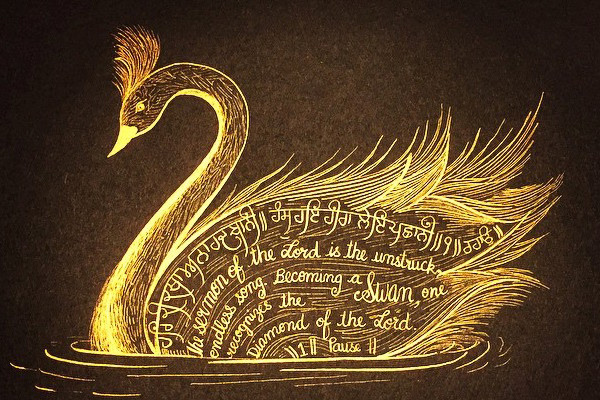
It is interesting that people’s perceptions of birds can change over time and with education. For example, traditionally the swan is seen as beautiful and intelligent, devouring pearls from the riverbeds, and conversely crows are seen as ugly. Nowadays, it is understood that crows are actually much more intelligent than many other birds, and we now know that swans do not eat pearls. But as these were the prevalent beliefs of the time, and so were used to convey a message which readers could relate to. Nowadays we still have strong beliefs which are tied to emotion, but many of these beliefs involve the supernatural rather than natural phenomenon. Similarly symbols are used to create fear or propaganda in a way to influence people’s beliefs and perceptions. Such are the modern ways of influencing how we think.

It raised the question about the members as to whether the current generations of Sikhs are missing out on an understanding of these metaphors. For example, it is very rare in the UK to see certain birds which are mentioned within Gurbani. Sikhs often live in urban areas where they have limited contact with wildlife. This was not the case for the people living at the time when Gurbani was written. They would have been able to relate to the metaphors of birds and animals, whereas today we need to study the context of the metaphors before truly understanding Gurbani’s message. For example, Ganika is mentioned in Gurbani as having been liberated by the parrot teaching her how to recite the name of God. But nowhere in Gurbani is the story actually recounted. Therefore the people reading Gurbani need to have some understanding of that prevalent story of the time, before reading and understanding the message.

The members discussed the fact that reading about the birds mentioned within this book was enlightening as often we read Gurbani and hear the birds being discussed but actually don’t have an understanding of what these birds look like or how they behave. Some members believed the birds were mythical but actually the myths are steeped in truth. We discussed the terminology used e.g. the difference between a falcon, hawk and eagle. Guru Gobind Singh kept a falcon which is usually translated as a Baaj. Within this book the term Baaj is used to refer to a hawk. The Baaj was seen as a sign of royalty. It could not be kept within a cage as it would break any cage which held it. It was therefore supreme and could not be shackled.

The members concluded that we are potentially harming our connection with Gurbani by not being as attuned to nature as we once were. It would have been very common to come into contact with nature and indeed live within it in the past. This is much rarer now. Potentially we are losing something very valuable through our modern lifestyle and should keep an effort to maintain some connection and harmony with nature.

‘Bhakti and Shakti’ by Surjeet Singh

shakti

This month the book discussed was ‘Bhakti and Shakti’ by Surjeet Singh. The book can be found here.

Summary of discussion 

  • Initial thoughts about the book
  • Concepts of Nirvair/Nirbhaou in relation to Bhakti & Shakti
  • Bridging the gap between concepts and reality
    • Previous wars, modern day wars and daily struggles
    • The relevance of Bhakti & Shakti today
  • The reality of modern states, politics and how to integrate Bhakti & Shakti within this framework
  • The ideals of a Sikh and the example left by the Gurus
    • Do we rely upon those ideals as a historical event only? How can we recreate these ideals in the world today?
  • The importance of Amrit
  • The importance of arms/weapons in relation to Sikhism

In depth analysis

The discussion kicked off with members reflecting that the book was fairly easy to read and explored basic concepts within Sikhi but in a unique way. Members found it helpful that the author related Bhakti and Shakti to the concepts within Mool Mantar, and discussed that the current atmosphere in society of both enmity and fear are contributing to an unwelcome social climate. In contrast the principles of Nirvair and Nirbhaou underpin both Bhakti and Shakti within the Sikh tradition. Members agreed with the author that Bhakti and Shakti go hand in hand, and one aspect complements the other in the fullest way. Righteousness cannot be achieved unless principles guide change, however the change comes about.

There was much discussion about the principles of Bhakti and Shakti within traditional historical settings of war, for example the wars fought by the Sikhs against the Mughals and even the world wars fought more recently. However it was recognised that we often oversimplify the concept of war based on this historical perspective, whereas wars and other conflicts are often fought very differently now. For example, the earlier Gurus performed huge diplomatic and non-violent achievements which the author did not discuss in the book. Instead the focus was very much on the Mughal state and oppression within those times.

In the book the example of a hundred year guerrilla war was given as a manifestation of Bhakti and Shakti in historical practice. Groups of individuals within this period acted as they saw fit, more or less independently, waging a war which was not part of a formally organised military attack, highlighting that the ideals of Bhakti and Shakti were actually lived in practice by groups of individuals. These ideals are not just applicable when talking about collective armies. In contrast, the world today relies upon modern armies to maintain these ideals, but it is this enough for a Sikh? The ideals of Bhakti and Shakti are ever-present within the Sikh Dharam, but how does this translate into reality when Sikhs live integrated within the current world? Is democracy enough to render these concepts obsolete or is there still a role for them? Can Sikhs rely upon the state to fight against oppression, rather than taking up the cause themselves?

Modern day examples of discrimination and oppression were shared by members, highlighting that the world is still very much in need of the principles of righteousness in order to deal with such situations. One would hope that the principles of Bhakti and Shakti would mean that a Sikh felt able to deal with oppressive or discriminatory situations effectively, even if it meant putting themselves at risk for a greater cause. We live in a relatively free society, and yet we all know of examples where racism has prevailed or bullying has taken place. We can even see the faults within the political system, which, despite its democratic principles, may not always hold our leader to account. So democracy and the state cannot be relied upon fully to execute the principles of Bhakti and Shakti. Sikhs must still maintain these principles and use them when needed to deal with everyday situations. However the members also reflected that the concepts of Bhakti and Shakti within Sikhi are encompassing of everyone (regardless of religion). The Gurus did not come to make an organised religion, but came to propagate Dharam for the world, regardless of sect or creed.

The members discussed the examples provided within the book regarding the Mahabarata and the Ramayan. The characters within these texts were not simply good or evil, but were complex and interesting, afflicted by the same vices which afflict us today. This highlights the fact that Shakti is not simply referring to an episodic fight against evil, but is something much more dynamic and ever-present. We are now dealing with much more insidious and complicated manifestations of evil than simple war and peace. The author raised the issue of eliminating evil through Bhakti and Shakti, but the members reflected that this may not truly be possible. For example many forms of so-called evil are linked with mental health problems. Perceptions of evil are different and evil is probably a rather unhelpful world anyway. However, it is possible to lead by example and change oneself, in order to affect wider change. Not to act, is almost rendering a person culpable of the change which results from that inaction.

The true Shakti of the Khalsa does not rely upon praying for a higher being to come and save you. Praying in the face of tyrrany has a limited role, but utilising the tools set forth by the Guru is more likely to be successful. The group discussed how Guru Gobind Singh Ji had nurtured this idea by introducing terminology such as ‘Mahakal’ to describe God, and introducing combat activities as part of every day life. There was some debate about whether this aspect of Sikhi is still relevant and how it can be relevant to today’s world. For example, many Sikhs now feel that the Kirpan is a symbol but others feel strongly that it can still be a weapon, which can be used against a Sikh if the Sikh is not confident in using it themselves. In any case, before picking up a weapon have we as Sikhs ourselves got the foundation of Bhakti to even get to that point where the use of a weapon can be condoned? The concept of using physical Shakti only as a last resort was highlighted when the members asked the question whether Guru Arjan Dev Ji had an army. It has been revealed in some historical texts that Guru Arjan Dev Ji did indeed maintain an army of a certain number, but did not engage this army even when his shaheedi was impending.

The example set by Guru Gobind Singh Ji was discussed in several ways. Firstly we discussed the example whereby he was willing to sacrifice his own children, without any special treatment even for their cremations compared with the rest of his Sikhs. Secondly the embodiment of compassion which weaved through every action was evident in the book as the author described the Guru’s gold-tipped arrows which could be used for the ‘enemy’ soldier’s funeral rites or for the injured medical attention. This shows that in actual fact, the Guru had no enemies and was fearless – the principles of Bhakti and Shakti in human form.

Finally, the author highlighted the historical context and importance of Amrit in cementing these principles. Various metaphors were used to show the significant of water, pataashe, the khanda of steel and the recitation of Gurbani, without which the Amrit ceremony could not be completed. The author also highlighted the significance of the Kakkars. The members reflected that although the principles of Sikhi emphasise oneness and equality of all, the Sikhs today have created their own caste system in terms of jathebandis and Amritdharis versus non-Amritdharis which prevent us from actually realising the concepts of Bhakti and Shakti. If we truly opened our minds to the oneness of humankind, and the values of Bhakti and Shakti we may find ourselves willing to engage in social and political debates more and more, by fostering positive change and helping at grassroots level to people who are truly in need.

‘Guru Nanak: His Status Salience’ by Sirdar Kapur Singh

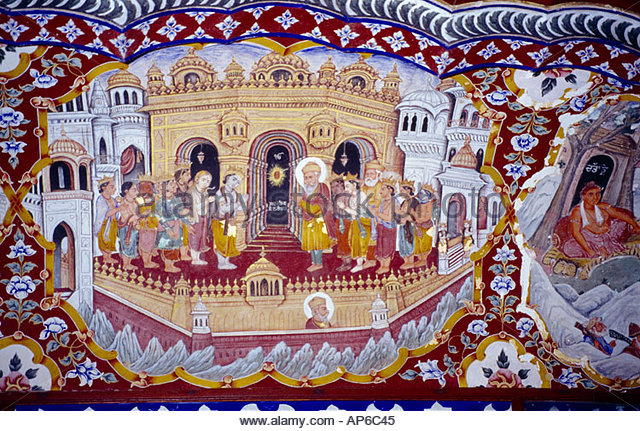
This month’s book was “Guru Nanak: His Status and Salience”’ by Sirdar Kapur Singh. The book can be found here. Sardar Kapur Singh was honoured with the title ‘National Professor of Sikhism’ by Sri Akal Takht Sahib.

amritsar-india-baba-atol-tower-fresco-guru-nanak-sikh-ap6c45

Summary of the themes covered

  • Why did the Guru come to earth?
  • Was the timing significant?
  • Is the Guru an Avtar or Prophet?
  • What is a true Guru?
  • Does science provide humans with all the answers they need?
  • What is the status of the Guru?
  • What were the prevailing problems and how did the Guru solve these?
  • Do we do Sikhi an injustice by adopting Western concepts?


Full analysis

The book club commenced with a discussion on why Guru Nanak Dev Ji came to earth and whether there was signficance to the time. Sardar Kapur Singh writes that there was a major shift in human thinking and that this was a critical point in human history. Many Sikhs ask the question why the Guru came at a certain time point and not before? Not many people can answer this question clearly. The prevailing argument is that the world had become a dark place which was in need of spiritual light, and this is mentioned within the book. However this raises the question would the Guru have come to earth if the world wasn’t dark in this way? One member mentioned that other Avtars have previously come to the earth at critical time points in history for example Krishna.

Following from this we discussed Sirdar Kapur Singh’s clarification regarding Avtars and Prophets and his argument that Guru Nanak Dev Ji super-ceded these manifestations. His argument was that the Guru is essentially the same as God, and God is free from incarnations. A brief discussion arose regarding whether it is correct for Sikhs to believe in other Avtars and this was not dwelt upon in depth due to a significant difference of opinion amongst members about the validity of the writings of Sri Guru Gobind Singh Ji that provides a clear answer on this.

One of the important aspects of this book was Sirdar Kapur Singh’s explanation of the term Guru and the different types of Gurus which have existed in history. It is important to recognise that the Sikh term Guru is significantly different from the common concept of Guru within India. Similarly the word reformer is often used to describe Guru Nanak Dev Ji but Sirdar Kapur Singh writes that the term reformer is not appropriate due to reformers being people who restore already established religions to their original purity, accepting allegiance to that faith. Guru Nanak Dev Ji clearly established a new order and didn’t accept allegiance to any other faith. Neither was the Guru an Avtar because an Avtar descends to earth to restore order within chaos, re-establishing traditional values. Guru Nanak Dev Ji created new and higher values. The last Prophets are traditionally thought to be Abrahamic, and these Prophets rejuvenated already preached religions. Guru Nanak Dev Ji does not fit this mould either. “Guru Nanak Dev Ji revealed a new value-system for mankind. He inserted Himself into history to initiate genuine revolution in the form of a new destiny for man.”

The members discussed that Sikhs should be aware of differences in terminology and should avoid using terms which come from other orders, faiths and traditions to describe Sikh concepts. There are many historical accounts which claim Guru Nanak Dev Ji is a saint, Avtar or Prophet, and it can be easy to attempt to Westernise our own language in attempt to make it understandable. We see this when we teach young children – sometimes we dumb down complicated concepts but sometimes we also change these concepts so that they are comparable to other religions for the sake of making things easy to understand. Perhaps we should accept the concepts as they are and let our children explore them naturally as time goes on. One member commented on the word Samaritan being an internationally renown and recognised word with a certain universal meaning. The word Khalsa should have a also have a well recognised meaning so that the world knows what the Khalsa stands for.

Sirdar Kapur Singh was critical of science’s limitations and the members discussed the pros and cons of this argument. We agreed that science is limited to exploration of the external, known world, but does not have the capacity to explore the unknown spiritual world. It has limited understanding depending on the prevalent knowledge of the time, and therefore is in itself a constantly changing knowledge. The universal truths put forth by Guru Nanak Dev Ji are unchanging and constant throughout time. The tradition of Western philosophy is based on Decartes’ concept of ‘I think therefore I am’. This was regarded as a spiritual awakening of that time period. Guru Nanak Dev Ji’s approach is to destroy individual ego and therefore the conclusion is that ‘I don’t exist.’

The members briefly touched about the subject ‘Where is the mind?’ and the relevance of Swarag and Narak, but it was agreed this was not within the confines of the book. We went on to discuss the true meaning of the word Guru in terms of Sikhi, and the relevance of the Guru today. Guru Gobind Singh Ji has stated that the Shabad Guru and Guru Khalsa Panth are the Sargun forms of the Guru, and that the Panj Pyare collectively represent the physical embodiment of the Guru.

We recapped on what Sirdar Kapur Singh felt was the salience of Guru Nanak Dev Ji. Two of the points he mentioned were firstly the need for respectful fear of God, and the willingness to contribute to society. There was some debate about the word fear and whether this implied punishment, or whether this was fear linked with a loving relationship between the Sikh and their Guru. Social commitment was discussed as being one of the fundamental points of Sikhism, rather than focus on pure meditation. Sirdar Kapur Singh commented that Guru Nanak Dev Ji accused the prevailing holy men of the time of abandoning their responsibility to the masses in terms of providing spiritual guidance.

Along a similar thread, the members discussed that social commitment has now become more of a monetary thing rather than involving individual sacrifice or the service of wider society. For example, many Sikhs focus on their careers or families and give Daswandh as a solely monetary donation. The members recognised that education plays an important role in life but that it is not the ultimate end point in life.

This month’s discussion concluded with a summary of the members feelings on the salient points within the book, and their feelings on the book club in general. If anyone would like ongoing access to the broadcast of this month’s book club on Facebook please email us at sikhibookclub@gmail.com or contact us on Facebook.

‘The Udasis in Colonial Punjab 1849-1947 AD’ by Kiranjeet Sandhu

Udasis

In October’s book club meeting we discussed ‘The Udasis in Colonial Punjab 1849-1947 AD’ by Kiranjeet Sandhu. The book can be found here.

Disclaimer: Please note the opinions stated here are not of any one individual or association, but are only a record of the points discussed by our members in this month’s book club.

This text was published in 2011 from Guru Nanak Dev University as part of a PhD in Philosophy. There is not much information on the author but we can assume the text has been written from an academic’s point of view. The meeting began with many members reflecting that there was clearly a huge amount of research which had gone into producing the thesis.  On the other hand this made the text slightly difficult to read as there was a large volume of condensed information which didn’t always flow easily in the mind of the reader.

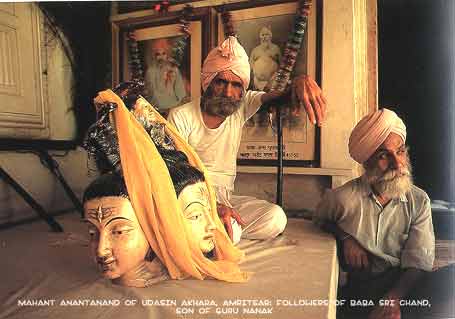
The thesis highlighted the multiple meanings of the word Udasi (the travels of the Guru, the Udasi samparda and the direct meaning of renouncing the world). Guru Nanak Dev Ji went on Udasis, but Baba Sri Chand Ji became an Udasi. The references within the thesis were mostly unheard of to many of the members, indicating the lack of familiarity we have with texts from the Sikh Empire and Udasi samparda. It was clear that there had been many offshoots from Sikhi right from the time of Guru Nanak Dev Ji. Often we mistakenly perceive that disunity is a modern problem within the Panth.

During the time period described in the thesis, the Masands were contributing to the recognised preaching system within the Indian subcontinent. Was it due to a failure of their organisation that the Udasis came to the fore? Or were these two separate but co-existing systems? The thesis indicated that potentially one of three situations occurred with regards to the Udasis. Either Baba Sri Chand Ji started the samparda outside of Sikhi right from the start, or he was initially resentful of not having the Guruship and then subsequently was welcomed back into the Sikh fold, or thirdly that the Udasis came back into the Sikh Panth but then chose to leave again. The author doesn’t fully address which of these is closer to the truth.

The text made reference to some belief systems which clearly differ to the mainstream Panth e.g. five deity worship. It is unclear when this was introduced within the samparda and sometimes appears at odds with the samparda’s principles. Traditionally Udasis believe in two Gaddis – Guru Angad Dev Ji as the sucessor of Guru Nanak Dev Ji, but also Baba Sri Chand Ji as a holder of spiritual knowledge. There was discussion as to whether the Udasis believe that Baba Gurditta Ji was a reincarnation of Guru Nanak Dev Ji and the implications of this i.e. whether this validates their belief in legal succession. Clearly the act of Guru Hargobind Sahib Ji giving his son to this samparda may highlight that the Udasis and Sikhs are close brotherhoods but with slightly differing viewpoints. Although Guru Gobind Singh Ji created the Khalsa which united the Sikhs, certainly the Udasis are not included amongst those groups with whom Sikhs are instructed not to associate when inducted into the Khalsa brotherhood. Some Udasis have adopted the concept of Amrit and also join the mainstream Sikh Panth.

The members discussed the different approaches to succession. For example, the Gurus participated in nominal succession; whomever was the best individual to take the Guru’s succession became the next Guru, regardless of familial association. However the Udasis may have preferred nominal succession i.e. that Baba Sri Chand Ji was the rightful heir of Guru Nanak Dev Ji. However as Baba Sri Chand Ji was celibate they must have started a nominal succession process themselves in order for the samparda to survive. Subsequently the Udasis supported Guru Arjan Dev Ji when they were proclaimed Guru, rather than supporting Prithi Chand. This may indicate an evolution in their thinking over time.

There is no doubt that Baba Sri Chand Ji was an elevated spiritual being, and this is evidenced by his own writings. The essence of these writings such as the Matra Sahib is very similar to the teachings of the Gurus. Udasis of course believe that these writings are to be given the same level of respect as Gurbani. The concept of gnosis (knowledge of the self) was discussed with regards to whether this is any different to that of Sikhi. Some felt that gnosis referred to hidden knowledge, and that in Sikhi although knowledge is treasured and received from the Panj Pyare, it is always accessible. The author makes reference to Baba Sri Chand Ji visiting the Gurus himself in subsequent years, beginning with Guru Ram Das. The 3HO Sikhs hold Baba Sri Chand Ji in high regard due to his association with being a true Yogi. The thesis also made reference to the huge role that the Udasis played in spreading the message of Sikhi across India and beyond and being the guardians of the Gurdwaras for many decades. Baba Sri Chand Ji clearly also was talented with a certain level of diplomacy which encouraged many Kings and materially important individuals to consort with him despite any conflicts they may have had with the Gurus. This is not to say that the Udasis have remained politically inactive; when fake Gurus attempted to infiltrate and take over the rule of Anandpur Sahib, the Udasis were responsible for maintaining the integrity of the Gurdwara complex and forcibly removing these individuals. Mahants were individuals within the samparda who’s primary focus was to act as decision-makers for the Deras. There were several other groups of individuals who supported the Mahants in achieving this role. Only a minority of Mahants were not worthy of the name, and this has unfortunately tainted the Udasi samparda by association.

The members discussed the pros and cons of payment when it comes to parchar. The thesis described in depth the system of grants which was present during the age of the Sikh Empire. The only way to prevent the Mahants from begging was to ensure they were provided a salary of sorts. Even during Mughul rule, the Udasis received money from the establishment. Was this a conflict of interest or a necessity for survival? (We have a perception that the Mughuls were one entity but this is not the case, and certain local Mughul rulers were fair.)  Each Dera within the Udasi samparda was also independent.

It seems an injustice that the Udasis were the gatekeepers of Takht Hazur Sahib until the 1800s but were then regarded as outsiders when the mainstream Sikhs took control of this. The Udasi samparda has been forced to undergo many transformations since the age of the Sikh Empire. After the British Raj, the education system was changed from a traditional one to one which employed the English system. Lands were divided in a completely different way, and consequently much land was lost, resulting in a reduction in the numbers of Udasis. One of the most significant aspects of this thesis was the discussion of the 1920s Gurdwara Reform Act removing the Udasis from the Panth. However the Anandpur Resolution aimed to reintegrate them back. Perhaps the Udasis purposely use their distinct identity to protect themselves against the rule of the SGPC. Even today the Brahmbuta Akhara lies very close to Harmandar Sahib but is not within its formal rule.

The members concluded that this thesis, although very academically written, provided several useful insights into the history and traditions of the Udasis many of which were previously unknown to us. The contribution of the Gurdwara Reform Movement in the alienation of this samparda cannot be underestimated, and consequently this has shaped our own often narrow-minded views of Sikhi.

mahant

‘Prabhu Simran’ by Gyani Sant Singh Maskeen

med2

September’s month’s book was Prabhu Simran by Gyani Sant Singh Maskeen. A copy of the book can be found here.

The book club met for the ninth time to discuss Gyani Sant Singh Maskeen’s book ‘Prabhu Simran’. The majority of members agreed that the book was relatively easy to read due to it being divided into small chapters which allowed time for reflection on each subject. However sometimes books which flow in one smooth narration are more engaging. There were certain aspects of the book which were repetitive at times, but for the majority of chapters the title indicated one topic which Gyani Ji stuck to. The book read more like a collection of short essays than a book as a whole.

The members reflected on the fact that Gyani Ji mentioned many different concepts initially and it seemed that these were abstract rather than practical. However as the book went on, practical aspects of simran were introduced and the concepts were built upon very effectively. For example, Gyani Ji talked about how we all try to satisfy our minds intellectually, but for spiritual growth it is the heart which brings us closer to God. Initially there is a need for blind faith rather than a full understanding of the intricacies of simran. For example, we all breathe and eat, but un;ess we are qualified after extensive study, we don’t necessarily understand the minutiae of how the air and food is absorbed and converted within our bodies at a celullar level. In the same way the absolute understanding of meditation is only revealed to those who have started the journey and are studying it. It was emphasised in the book that the real methods and meanings of simran will only come once someone has started the journey of performing simran. It might have been expected that Sant Singh Maskeen would have approached the topic of simran from a purely intellectual perspective, but this was not the case and highlighted the deeper understanding that the book provided.

The book mentioned several people of other faiths which the members found interesting. For example a Sufi Iranian poet (Sheikh Saadi) was mentioned several times. General Ayub Khan was mentioned as having the Mool Mantar as a guiding force through his life to a significant extent. Bhagat Kabeer Ji was also mentioned as being the highest of saints within the book.

This led onto a discussion regarding the premise that one can’t truly meditate unless God blesses that individual. There was debate about this concept and its applicability to daily life. Is simran a way to become blessed or is simran a blessing that has to be given by the Divine? The members talked about karam philosophy and the way this influences our destiny, as well as the need to make the most of opportunities that are provided to us in this life. The role of parents was discussed as being a guiding force to ensure children lead spiritual lives, but the limitations of this role was also highlighted during our discussion. Parents can only do so much, and sometimes children follow a completely different path. A discussion on the concept of free will followed on from this later in the meeting. Does free will exist or is it a myth? There was lively debate about this during the meeting, with some members saying that there is free will to an extent, and others saying that everything is ultimately God.

Interestingly Gyani Ji highlighted Gurbani which reminds us to blame ourselves for our own actions rather than our surroundings, circumstances or parents. The members discussed how rare this is in reality. All over the world people are reluctant to take responsibility for their actions. It is one of the hardest things to do.

Gyani Ji mentioned the power of sangat as being one of the most important aspects of doing simran. The members reflected on whether there was a difference between good sangat and bad sangat, and how this can affect one’s spirituality. Is there a right way to meditate? The book indicates that there is no one correct way, but offers a multitude of stepwise suggestions on how to start on the path of meditation. The book emphasises the importance of saadhsangat (true saintly sangat). Meditation needs to be nurtured and developed over time, rather than coming instantly.

In a similar way Gyani Ji emphasised the need to nurture one’s personal relationship with God. There was parts of the book which highlighted the meaningless way in which one can recite God’s name, but conversely the book also mentioned that speaking out loud is one of the most important first steps in doing simran. Even if you are meditating and your mind is not focusing, the word of God’s name itself is being said and so the act is not futile. As Gyani Ji says, it is better for the mind to wander in only one direction than ten. The importance of routine was highlighted within the pages of the book, with Gyani Ji drawing comparison to the routine of birds, and emphasising that if you want to live like a king during the day, one must pray like a beggar at night. It is interesting that many spiritual traditions highlight the early hours of the morning as being the ideal time to meditate. This was also mentioned in the book as being important and Gyani Ji mentioned that as the word is itself being lit up, so is the soul at this time.

This led onto a discussion about the difference between the brain, soul and mind. Can the mind exist without the soul? Can the soul exist without the mind and brain? Or are the three inextricably interlinked?

The name of God was discussed. On one hand Gyani Ji states that the name used for recitation does not matter. On the other hand Gurbani says that Satnaam is the true name. Furthermore we use Waheguru as the name to be drawn upon in meditation. The members reflected on the fact that once an individual passes the starting point of using names, the names themselves become irrelevant. But the book highlighted that a transference takes place when an individual meditates on a name. The name itself can spark a current of love within the soul, if it means enough to that individual. On one hand God has no name (as indicated in Jaap Sahib) but on the other hand Waheguru Gur Mantar Hai.

In one chapter Gyani Ji discussed the spiritual spheres which exist beyond our comprehension. Despite this during the meeting an attempt was made to comprehend this. There was discussion as to whether these spheres were real, and whether they aligned with current scientific principles of today. Some members felt that the book and Gurbani references were declaring these spheres and domains of spirits as a reality, whereas others felt that Gyani Ji was fairly clear in using these as metaphors.

The crossover of many concepts amongst the eastern faith traditions was recognised e.g. Mukti and liberation. The difference between Sikhi and other western faiths is that liveration is not for after death, but is something to be attained within life. This was described as Sehaj avastha in the book I.e. a state of ultimate equipoise where the unstruck melodies are heard and true perception arrives. (This led onto a debate about what anhad shabad really is or means but it seemed clear that our meagre attempts to explain this indicated an overall lack of first hand experience.)

The members concluded by recognising that the power of this topic was immense and that the topic of simran was ultimately the true essence of Sikhi.